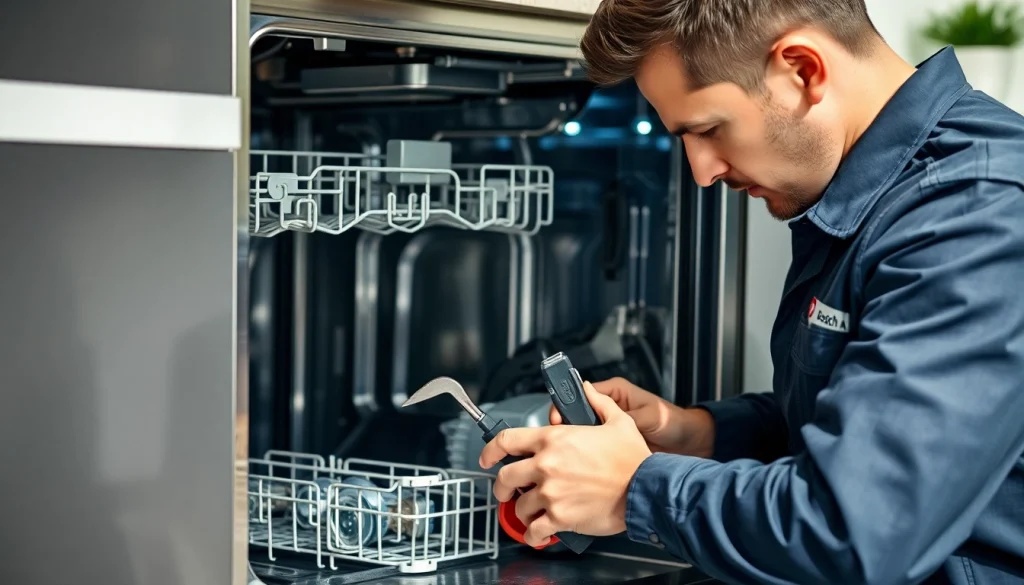
Understanding BOSCH Dishwasher Issues
Common Problems and Symptoms
BOSCH dishwashers are renowned for their reliability and efficiency; however, like any appliance, they can encounter issues. Common symptoms that indicate a malfunction include:
- Water not draining properly
- Failure to start or complete a cycle
- Strange noises during operation
- Leaks or water pooling around the dishwasher
- Residual food particles on dishes after washing
- Display panel not responding or displaying error codes
Identifying these symptoms early can help you address problems before they escalate, resulting in more expensive repairs or replacements.
Causes of Dishwasher Malfunctions
Understanding the potential causes of these malfunctions can be essential for troubleshooting. Here are some common causes:
- Clogged Filters: Food debris can build up in filters, preventing proper drainage.
- Faulty Water Inlet Valve: If this valve is defective, your dishwasher won’t fill properly.
- Drain Hose Issues: A kinked or clogged drain hose can prevent water from freeing up.
- Electrical Problems: Issues with wiring or power can cause the appliance to fail to start.
- Pump Failures: The pump plays a crucial role in circulating water; if it’s damaged, proper cleaning won’t occur.
Addressing these issues promptly will significantly prolong your dishwasher’s lifespan and functionality.
Importance of Regular Maintenance
Preventative maintenance is key to ensuring the longevity of your BOSCH dishwasher. Regularly cleaning filters, checking water inlet valves, and inspecting hoses can prevent problems before they arise. Regular maintenance tasks should include:
- Removing and rinsing the dishwasher filter
- Check and clean spray arms for clogs
- Inspecting the door seal for wear
- Running a cleaning cycle with a dishwasher cleaner
Utilizing these preventive measures will enhance your appliance’s efficiency and reliability, ensuring you enjoy every wash cycle.
Diagnosing Your BOSCH Dishwasher
Step-by-Step Troubleshooting Guide
When faced with issues, follow this systematic approach to diagnose your BOSCH dishwasher:
- Identify the Symptoms: Take note of any unusual noises, leaking, or error codes.
- Check Power Supply: Ensure your appliance is plugged in and the circuit breaker is not tripped.
- Inspect the Door Latch: A door that isn’t properly closed can trigger the dishwasher to stop working.
- Examine Filters and Sprayers: Remove and clean filters, check spray arms for blockages.
- Monitor Water Supply: Make sure the water inlet valve is open and water is flowing.
Using this method, you’re likely to identify the malfunction more efficiently.
Essential Tools for Diagnosis
Having the right tools is crucial when diagnosing your dishwasher:
- Multimeter to test electrical components
- Screwdrivers for removing panels
- Pliers for hose inspections
- Cleaning brushes for filter maintenance
Equipped with these tools, you can conduct a thorough inspection and diagnostics of your appliance.
When to Seek Professional Help
While many issues can be tackled at home, there are times when seeking BOSCH dishwasher repair is advisable:
- Complex electrical issues
- Persistent plumbing problems
- Damage to key components (e.g., pumps, motors)
- Waranty work needing professional authorization
Understanding when to escalate your repair needs can save you time and prevent further damage to your appliance.
DIY Repair Techniques
Fixing Common BOSCH Dishwasher Problems
Many BOSCH dishwasher problems can be addressed through DIY fixes:
- Not Draining: Check and clear the filter and drain hose.
- Leaking Water: Inspect door seals and hoses for malfunctions.
- Bad Odors: Run a cleaning cycle with vinegar or special dishwasher cleaners.
By addressing these simple problems, you can save yourself considerable time and money.
Parts Replacement Instructions
Sometimes, replacing parts is necessary. Here’s how to do it:
- Identify the Part: Look up the part in the manual or online to verify compatibility.
- Power Off: Always disconnect the dishwasher from the power source.
- Access the Compartment: Use appropriate tools to open the dishwasher’s internals.
- Remove the Old Part: Carefully detach the faulty component.
- Install New Part: Follow the manufacturer’s instructions to install the new part.
- Test the Dishwasher: After reassembling, test the dishwasher to ensure the fix was successful.
Taking a methodical approach will ensure the repair is successful and your dishwasher is back in optimal condition.
Safety Precautions for DIY Repairs
Safety should always be your priority:
- Disconnect power before any repairs.
- Use appropriate personal protective equipment (PPE).
- Avoid using water on electrical components.
- Follow manufacturer guidelines precisely.
By adhering to these precautions, you’ll minimize the risk of injuries or further damage to the appliance.
Maintaining Your BOSCH Dishwasher
Best Practices for Longevity
Maintaining your dishwasher involves consistent attention to its operation:
- Run regular cleaning cycles.
- Keep an eye out for unusual noises or operational changes.
- Utilize high-quality detergent to prevent buildup.
- Check and replace worn components promptly.
Implementing these practices will help your dishwasher operate efficiently for years.
Cleaning and Care Tips
Effective cleaning can prevent odors and buildup:
- Clean the filter regularly.
- Wipe down the door seals and interior.
- Run a vinegar cycle monthly to remove deposits.
- Ensure all spray holes are clear.
These steps can significantly improve your appliance’s performance and cleanliness.
Regular Inspection Checklist
Creating a routine inspection checklist can streamline maintenance:
- Inspect hoses for cracks or clogs.
- Check connections to ensure they are secure.
- Assess leveling; an uneven dishwasher can cause issues.
- Look for any signs of rust or corrosion.
Regular inspections will help spot issues early, keeping your dishwasher running smoothly.
Conclusion and FAQs
Summary of Repair Importance
Repairing your BOSCH dishwasher promptly is essential to maintaining its functionality and efficiency. Regular maintenance, timely repairs, and understanding common issues can keep your dishwasher functioning well, ultimately saving you time and money.
Frequently Asked Questions
Is it worth repairing a Bosch dishwasher?
If the appliance is four to seven years old and out of warranty, repairing it can be worthwhile. Repair costs typically range from $100 to $200.
What is the most common problem with a Bosch dishwasher?
Common issues include not draining properly, not filling with water, and failing to heat adequately during cycles.
How often should I clean my Bosch dishwasher?
It’s advisable to run a cleaning cycle every month and inspect the filters weekly for optimal performance.
Can I use regular detergent in my Bosch dishwasher?
No, it’s recommended to use a high-quality dishwasher detergent designed for automatic dishwashers to avoid residue buildup.
What should I do if my dishwasher leaks?
Inspect door seals and hoses for damage. If you can’t find the source, it’s best to call a professional for assistance.